
Risk 1:
Uncertain Energy Availability
EXTREME RISK

Risk Overview
Description:
A reliable bulk power system requires system operators to maintain a constant balance between electricity supply and demand. Ensuring resources are available to maintain this balance is referred to as resource adequacy. Resource adequacy is accomplished by planning generation capacity around peak demand forecasts and including a reserve margin to account for random uncertainties, like unexpected generation outages (i.e., due to failure) or inaccurate load forecasts.
Until recently, this method was effective because electricity supply was largely comprised of dispatchable plants that run on-demand with ample on-site storage of fuel. Electricity use was also stable and predictable based on historical consumption patterns from temporal data (like season, time-of-day, or day-of-week) and weather. Rapid expansion in the use of electricity and shifts in how electricity is generated have made it harder to maintain this critical supply/demand balance.
Key Drivers and Trends:
After years of stagnant growth, the 2025 NERC Long Term Reliability Assessment (LTRA) confirms a sharp rise in peak electricity demand across the MRO region. This surge is primarily caused by new large loads, such as AI-driven data centers and industrial expansion, along with continued electrification of transportation and home heating.

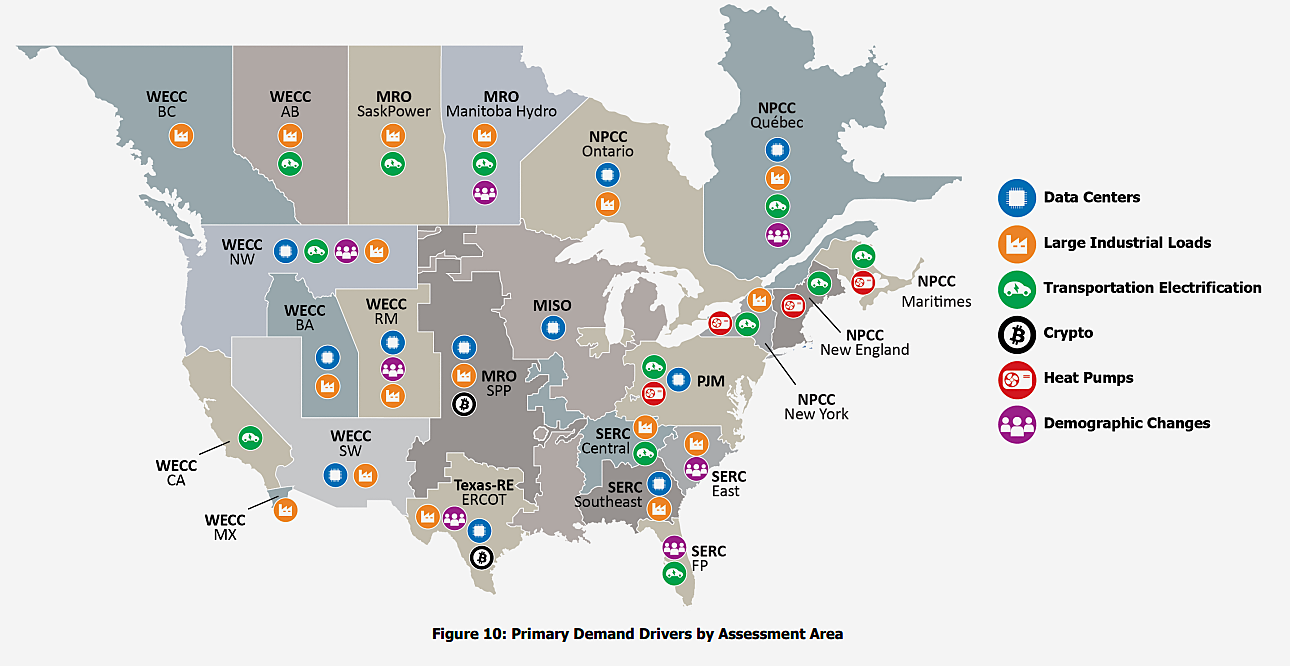
This shift in demand is straining grid resources and transmission infrastructure, and has complicated grid planning and operations.
On the supply side, NERC’s 2025 LTRA highlights a critical misalignment: thermal generators are retiring faster than replacement resources are coming online. Furthermore, the new resource mix—largely comprised of solar, wind, and battery—is inherently more variable (i.e., it relies on weather conditions or has limited output). When coupled together, there is increased uncertainty as to whether adequate electricity will be available to serve future demand.
The figure below from NERC's 2025 LTRA includes ten-year peak demand growth and compound annual growth rate (CAGR) trends since 1996.

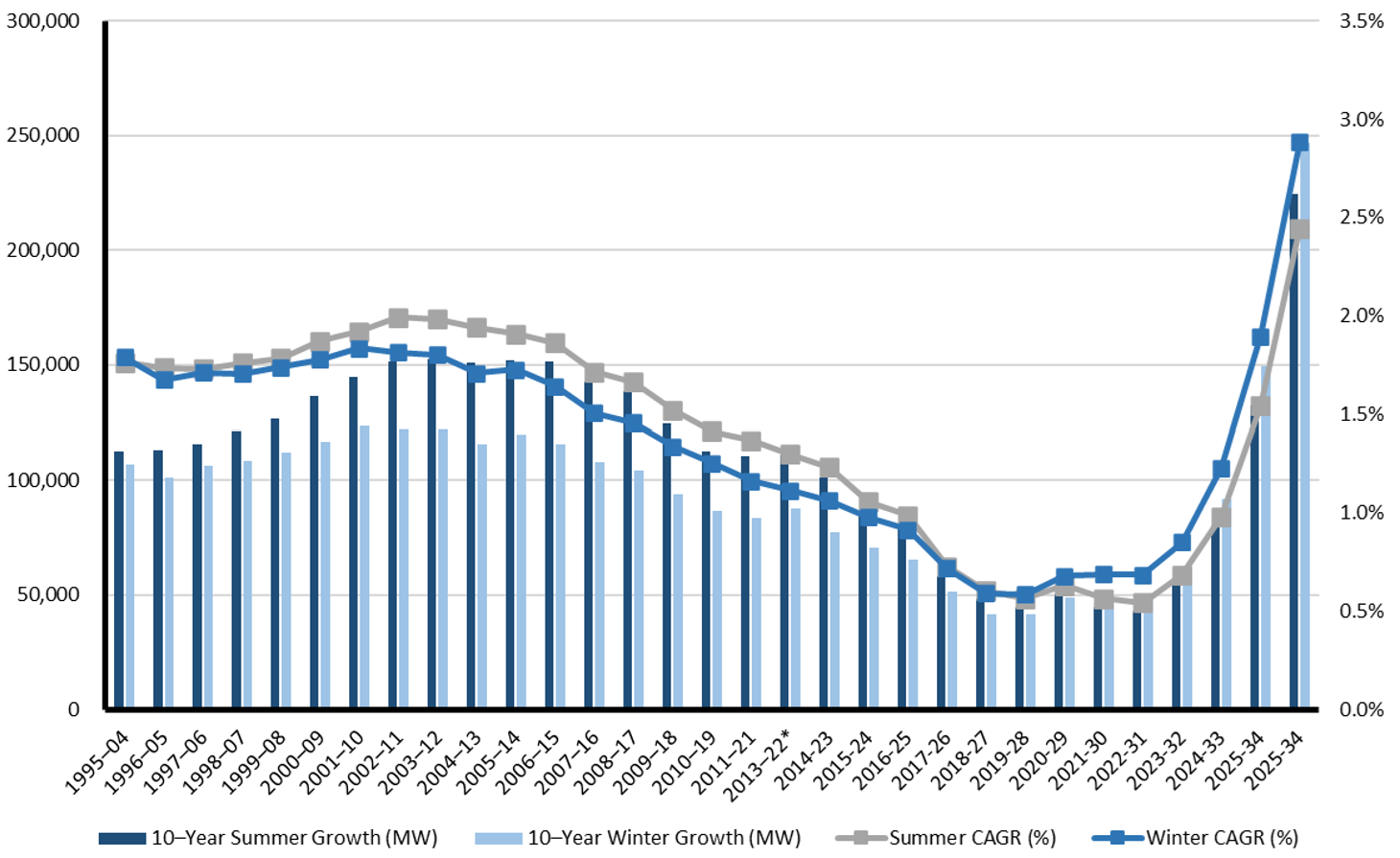
Since 2022, demand has grown exponentially, with the CAGR significantly exceeding long-term projections set in 1995. Recent data shows winter demand growth is now outpacing summer growth, signaling a fundamental shift toward winter-peaking energy usage.
Approximately 35 GW of retirements of dispatchable generation within the MISO region and 5 GW within the SPP region are projected through 2035.
In 2025 and 2026, the Department of Energy exercised its authority to delay retirements of several coal and natural gas plants. These Section 202(c) orders have been renewed several times and are keeping additional, dispatchable generation online for the foreseeable future.
However, it is unclear how long these emergency orders can persist, creating additional uncertainty as to when these assets and other future retirements will occur.
Over the next five years within MISO and SPP, there is a projected net increase of 20 GW of variable generation. Importantly, variable generation does not produce the same amount of amount of energy lost from retiring dispatchable generation.
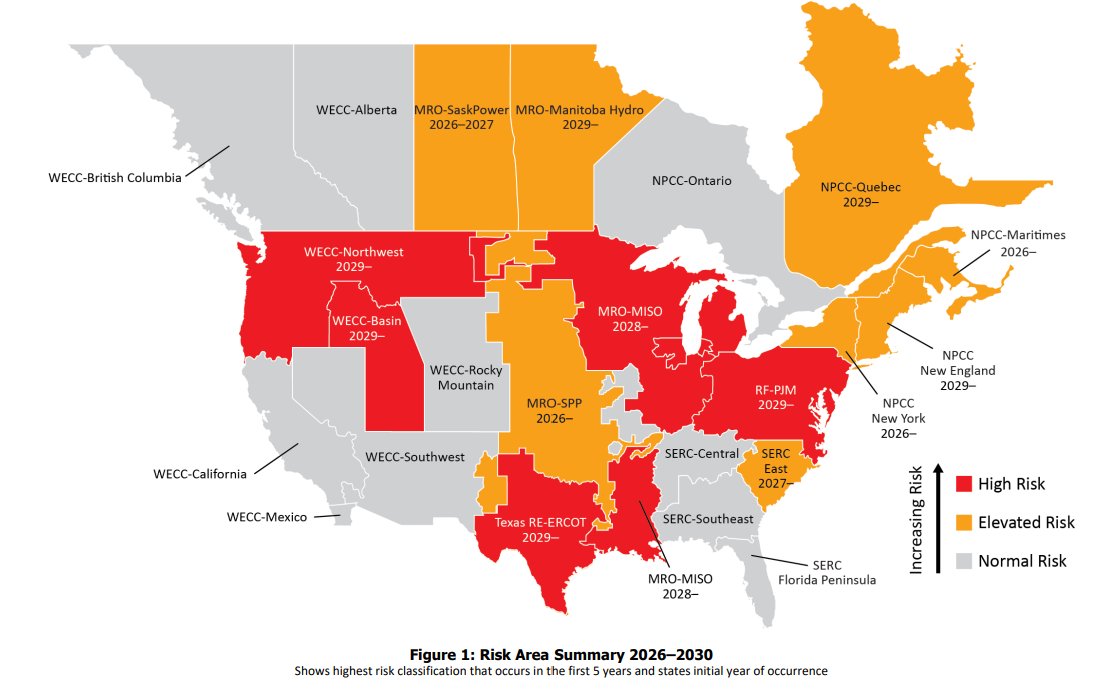
This mismatch, during both normal and extreme weather conditions, results in areas within the MRO region that are at high or elevated risk of energy shortfalls over the next five years.
While restarting retired Nuclear plants in the region will add much needed capacity beginning in 2029, new dispatchable generation resources are still needed to meet projected increases in electricity demand.
The Federal Energy Regulatory Commission approved expedited resource programs in 2025 for MISO and SPP to accelerate and prioritize generation that can be interconnected to address specific reliability risks. These resources could lessen shortfall risks if they are able to be brought online within the planned timeframes.



Event History:
- On May 25, 2025, MISO directed an operator-initiated load shed of 600 MW to maintain system stability within southeast Louisiana because local generation resources were unavailable along with limited transmission import capabilities. While this was a local event, it reflects the potential impacts a broader shortfall of generation capacity and transmission import capability can have on bulk power system reliability.
- Between January 23 and 25, 2024, wind generation output in SPP and MISO produced a mere 6.5% (1,222 MW out of over 58,000 MW) of full nameplate capability. Electricity demand was successfully met using other resources and imported electricity from neighboring Balancing Authorities.
- Winter storms Uri in 2021 and Elliot in 2022 brought extreme cold to the region, causing unexpected outages that reduced electricity supply at the same time energy use was spiking. Around 5,400 MW of operator-initiated customer load shed (the largest amount of load shed in the Eastern Interconnection) was required to maintain system balance during winter storm Elliott. Over 23,000 MW of load shed was required, mostly in Texas, during winter storm Uri. Both events were due to a lack of available energy to meet demand.
Actions to Reduce Risk:
The following mandatory standards are under development and not yet enforceable:
|
NERC Reliability Standard(s) |
Mitigating Activities |
|---|---|
|
Project 2022-03 Energy Assurance with Energy-Constrained Resources. |
Reliability Standard BAL-007-1 requires Balancing Authorities to assess the resources necessary to reliably supply energy to serve expected demand with operating reserves for a defined assessment period that is at minimum five days in duration and at maximum six weeks in duration. |
|
Under development: Requires industry to perform energy reliability assessments greater than one year out and determine actions to mitigate any energy deficiencies that are identified. The initial draft did not pass the stakeholder balloting process in December 2025 and is under revision. |
Other recommended actions include:
- Retirement of traditional, dispatchable power plants must be carefully managed to ensure a reliable and sufficient supply of electricity (sufficient replacement energy must be available before these plants are phased out).
- Flexible, on-demand resources, currently provided by natural gas-fired generation, are crucial for addressing the intermittent nature of variable, weather dependent generation like wind and solar.
- Siting and permitting processes need to be improved to remove barriers to development of generation and transmission that support system reliability.
- Explore capabilities for flexible loads to be more responsive to electricity shortfalls and alleviate demand when needed.
- Resource adequacy assessments should consider new metrics that go beyond the frequency-based criterion of the “Loss of Load Expectation” (LOLE), which determines resources needed to allow one-day of customer load loss in a ten-year period. (This Includes criteria that considers the size, timing, and duration of energy shortfalls.)
- A co-sponsored NERC and National Academy of Engineers Section 6 report on Evolving Planning Criteria for a Sustainable Power Grid identifies the need for more robust metrics and criteria for resource adequacy. The report also highlights next steps to form an improved approach to resource adequacy.
- Improve load forecasting to comprehensively determine future load growth based on the likelihood and timing of deploying new end-uses of electricity, such as electric vehicles, electric space heating, and large, single-point loads like data centers and industrial facilities.
 Built with Shorthand