
Risk 3:
Generation Outages During Extreme Cold Weather
HIGH RISK

Risk Overview
Description:
Extreme winter weather storms continue to stress the electric and natural gas systems. Electric generators fail at a higher-than-normal rate during extreme cold temperatures due to lack of winterization, electrical or mechanical failures, and loss of fuel supply. A majority of fuel supply loss during extreme cold is due to loss in production or transportation of natural gas.
Generator failures and high demand during Winter Storms Elliott in 2022 and Uri in 2021 led to record-breaking operator-initiated load shed to maintain a supply and demand balance. Recent winter storms in January 2024, 2025, and 2026 showed improvements in generator failures from winter storms Elliott and Uri. System operators were able to manage through those storms without shedding consumer load. This reflects improved winter preparedness across the North America bulk power system.
Key Drivers and Trends:
Expert analysis of Uri and Elliot showed insufficient winterization of generation assets (specifically in the southern portion of MRO's footprint), led to the load shed events. This includes inadequate freeze protection on thermal generation and cold weather cutouts of wind turbines,
Additionally, the production, processing, and transport of natural gas during extreme cold weather has had similar winterization issues, causing natural gas supply shortages. Natural gas infrastructure is more heavily relied upon during extreme cold weather to provide fuel “just in time” to an increasing number of gas-fired electric generators. At the same time, use of natural gas by consumers is increasing due to the extreme cold, resulting in natural gas shortages. Natural gas consumption reached record highs during cold snaps in both January 2024 and 2026.
The timing for utilities to procure supplies in the gas market does not always align with decisions to commit generation in the electricity market, especially when commitments are needed with little lead time going into an operating day or during the weekend or holidays.
Complicating this risk further is the accelerated retirement of traditional, dispatchable power plants that provide power on demand during periods of reduced power supply. Narrowing supply margins makes the system more vulnerable to significant energy loss when extreme cold weather causes power plant outages.
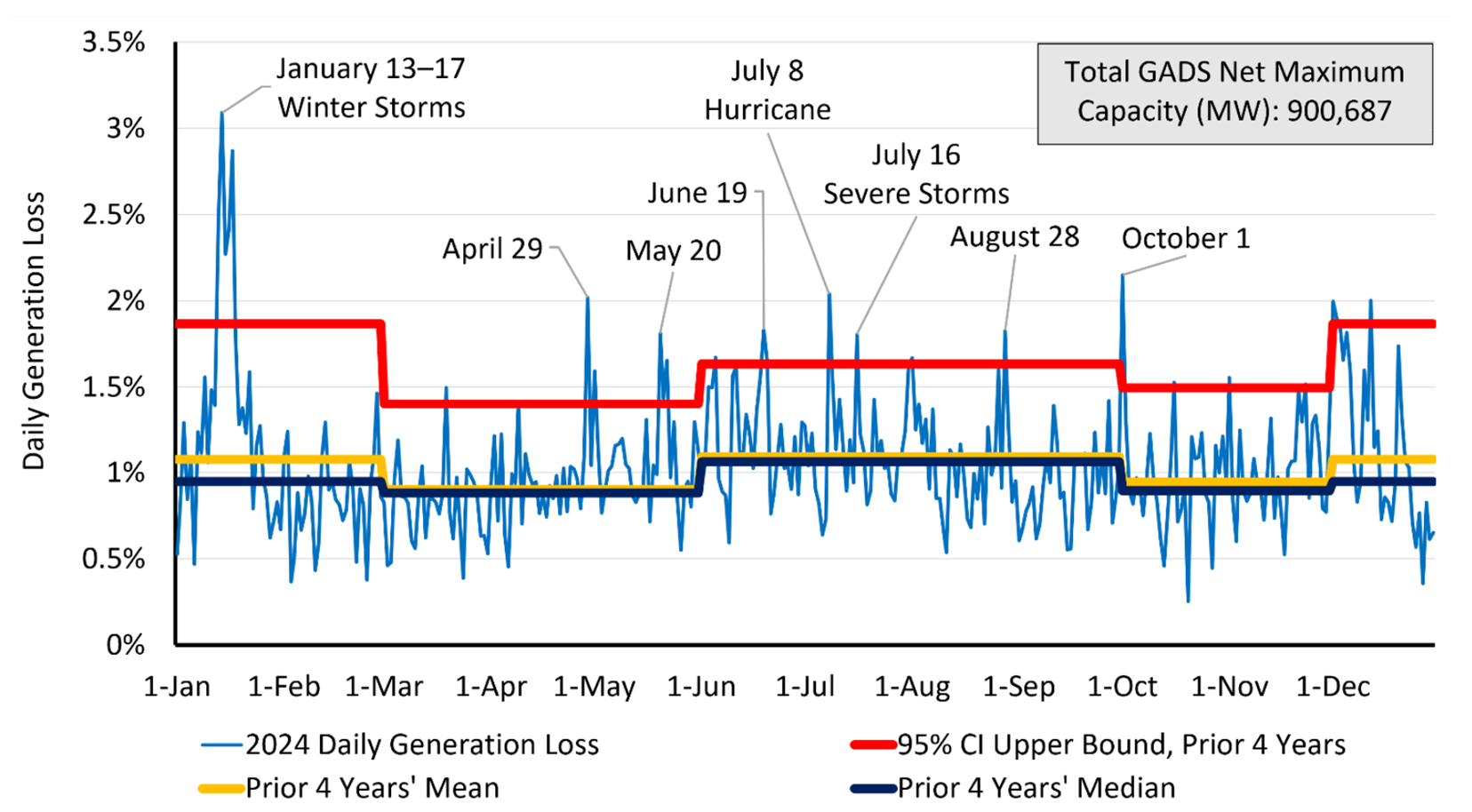
The figure below from the 2025 NERC State of Reliability Report shows the daily amount of generation lost due to unplanned outages in 2024. The winter storm in January 2024 caused a spike in generator outages three times the seasonal average. These outages during extreme cold weather are above the expected value shown by the red line.

Event History:
Five notable winter storms over the last decade have driven a large increase in unplanned outages of electric generation above the typical winter outage rate:
- January 2025 arctic events: 71,022 MW
- Gerri and Heather (Jan 2024): unquantified amount of unplanned generation outages,but recognized as higher than typical winter outage rates.
- Elliott (Dec 2022): 90,500 MW
- Uri (Feb 2021): 61,300 MW
- Storm in South Central US (Jan 2018): 15,800 MW
- Storm in Central and Eastern US (Jan 2014): 19,500 MW
Actions to Reduce Risk:
|
NERC Reliability Standard(s) |
Mitigating Activities |
|---|---|
|
This standard requires Generator Owners to calculate a minimum operating temperature for each unit based on historical data and design limits. For units operating below freezing, owners must implement freeze protection measures and maintain detailed cold weather preparedness plans. To ensure accountability, any unit that fails to perform at its designated temperature threshold must undergo a formal corrective action plan. |
Other recommended actions include:
- Participate in MRO’s Generator Winterization Program, which assists utilities in preparing for extreme cold weather by assessing winterization methods and preparation specific to a generating plant and providing best practices and opportunities for improvement.
- Follow recommendations from NERC’s Reliability Guideline on Generating Unit Winter Weather Readiness to prepare your generating plant for possible extreme cold weather conditions.
- Promote increased collaboration between the electric and gas industries to raise awareness of the interconnectedness of the two industries and protect reliability of both systems. If applicable to your organization, implement the recommendations identified by the North American Energy Standards Board report on the results of the Gas-Electric Harmonization Forum that occurred in 2023.
- Similarly, review the National Association of Regulatory Utility Commissioners Task Force on Gas-Electric Alignment for Reliability (GEAR) Report for recommendations to improve electric-gas coordination.
- Consider the incremental increase of forced generation outages due to extreme cold weather in planning generation reserve margin requirements for an area.
 Built with Shorthand